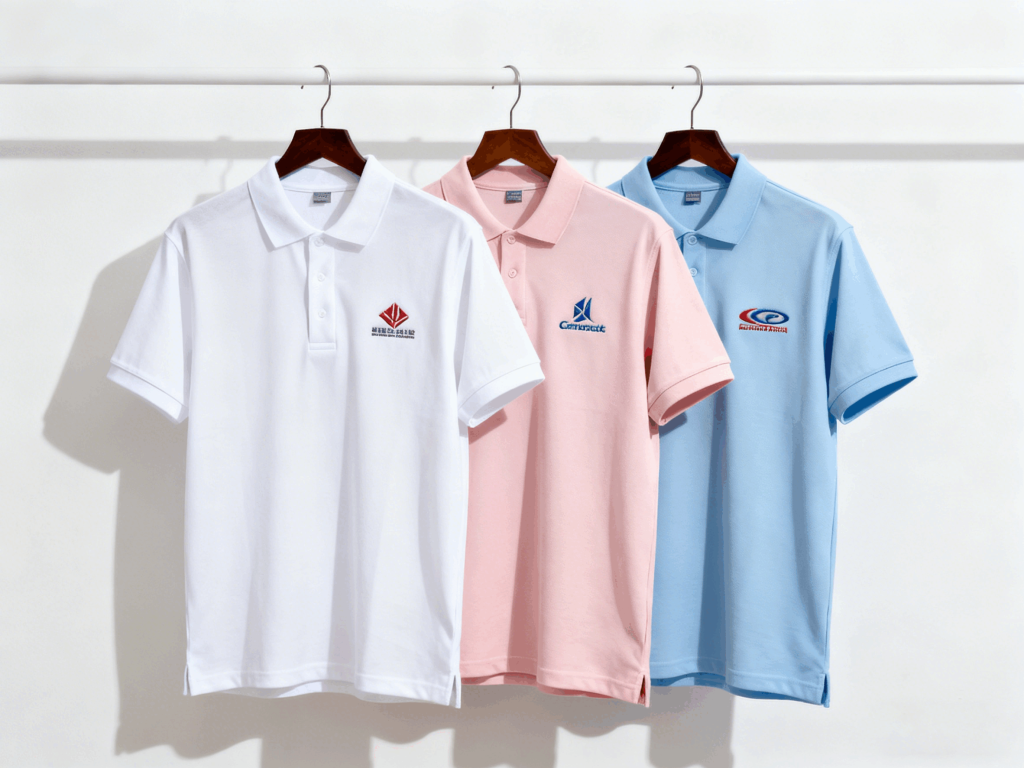
For most polo shirts, 180–220 GSM is a good all-around fabric weight. Lightweight fabrics around 140–180 GSM work well for summer uniforms, sports polos and quick-dry styles, while 180–220 GSM is a common range for corporate uniforms and everyday polo shirts.
If you want a heavier, more structured polo for workwear or premium collections, 220 GSM and above may be a better fit.
That said, GSM should never be chosen on its own. A 180 GSM cotton pique polo and a 180 GSM performance polyester polo can feel completely different.
Here is a quick starting point:
| Polo GSM | Weight | Best For |
|---|---|---|
| 140–160 GSM | Very Lightweight | Sports / Hot Weather |
| 160–180 GSM | Lightweight | Summer / Quick Dry |
| 180–200 GSM | Medium | Corporate Uniforms |
| 200–220 GSM | Medium-Heavy | Premium / Embroidery |
| 220–240 GSM | Heavy | Workwear / Structured Polo |
| 240+ GSM | Very Heavy | Premium / Special Applications |
If you are sourcing polo shirts in bulk, the right question is not simply “What GSM is best?” It is what GSM is best for this particular application, fabric and climate?
What Does GSM Mean in Polo Shirts?
GSM stands for grams per square meter.
It tells you how much one square meter of fabric weighs. In practical terms, GSM gives buyers an idea of how light, heavy, structured or substantial a polo fabric may feel.
But there is one misunderstanding worth clearing up immediately:
Higher GSM does not automatically mean better quality.
A 220 GSM polo is not automatically “better” than a 180 GSM polo.
GSM affects characteristics such as:
- Fabric weight
- Thickness
- Drape
- Structure
- Perceived breathability
- Durability
But the final performance of a polo shirt also depends on:
Fiber + Knit Structure + Yarn Quality + Finishing
For example, a 180 GSM bird eye polyester fabric may feel lightweight, airy and sporty.
A 180 GSM cotton pique fabric at the same weight can feel more textured, natural and structured.
Same GSM. Very different polo shirt.
That is why experienced buyers look at GSM as one part of the specification rather than treating it as a quality score.
Polo Shirt GSM Weight Chart
For bulk buyers, the following chart is a more useful way to understand common polo shirt fabric weights.
| GSM | Feel | Breathability | Structure | Common Use |
|---|---|---|---|---|
| 140–160 | Very Light | Excellent | Low | Sports / Summer |
| 160–180 | Light | Very Good | Medium-Low | Quick Dry / Hospitality |
| 180–200 | Balanced | Very Good | Medium | Uniform / Everyday |
| 200–220 | Substantial | Good | High | Corporate / Premium |
| 220–240 | Heavy | Moderate | Very High | Workwear |
| 240+ | Very Heavy | Lower* | Very High | Specialty / Premium |
*Breathability is not determined by GSM alone. Fiber type, knitting structure and finishing are equally important.
A lightweight fabric is not automatically more breathable, and a heavier fabric is not automatically uncomfortable.
For example, an open-knit polyester mesh may allow better airflow than a dense cotton fabric even if their GSM numbers are relatively close.
Is 180 GSM Good for Polo Shirts?
Yes. 180 GSM is one of the most versatile weights for polo shirts.
It sits around the lightweight-to-medium range and offers a good balance between comfort, structure and fabric consumption.
180 GSM polos are commonly suitable for:
- Corporate uniforms
- Hotel and hospitality staff
- Summer uniforms
- Promotional polo shirts
- Cotton pique polos
- Polyester polo shirts
- Everyday work uniforms
For warm climates, a 180 GSM polo can feel substantially lighter than a 220 GSM alternative while still having enough body to avoid feeling too thin.
It is also a practical starting point for many B2B buyers who want a uniform that can be worn for long working days.
Where 180 GSM may be less suitable is when you want a particularly heavy, structured polo or a large, dense embroidered logo.
In those cases, moving into the 200–220 GSM range may provide more fabric stability.
Is 200 GSM Good for Polo Shirts?
For many custom polo projects, 200 GSM is something of a sweet spot.
It is heavy enough to feel substantial without automatically becoming a heavyweight garment.
A well-made 200 GSM polo can offer a good combination of:
- Comfort
- Structure
- Durability
- Professional appearance
- Embroidery stability
This makes 200 GSM particularly popular for:
Corporate uniforms
Premium promotional apparel
Retail brands
Embroidered polo shirts
Hospitality uniforms
If a company wants a polo to feel more substantial than a lightweight promotional garment, but not as heavy as workwear, 200 GSM is often worth sampling.
Of course, the material still matters.
A 200 GSM cotton pique polo will not wear exactly like a 200 GSM polyester pique polo.
For a bulk order, I would always recommend evaluating both the GSM and the fabric composition before approving production.
Is 220 GSM Too Heavy for a Polo Shirt?
Not necessarily.
220 GSM can be an excellent polo shirt weight if the product is meant to feel structured, durable or premium.
It is commonly considered for:
- Premium polo shirts
- Structured corporate uniforms
- Workwear
- Cooler climates
- Heavy cotton pique
- Fashion collections
A 220 GSM cotton pique, for example, can create the classic substantial polo feel that some brands want for premium collections.
But there is a trade-off.
For outdoor sports, very hot climates or highly active work, 220 GSM may feel heavier than necessary.
If employees are working outside all day in summer, a 160–180 GSM performance polo may be far more comfortable.
So the question should not be:
“Is 220 GSM too heavy?”
It should be:
“Is 220 GSM appropriate for where this polo will actually be worn?”
Best Polo Shirt GSM by Application
This is where GSM becomes much easier to choose.
Instead of starting with a number, start with the buyer’s use case.
| Application | Recommended GSM | Suggested Fabric |
|---|---|---|
| Corporate Uniform | 180–220 | Cotton Pique / Polyester Pique |
| Hotel & Hospitality | 160–200 | Blend / Polyester |
| Sports | 140–180 | Quick-Dry Polyester |
| Golf | 160–200 | Performance Polyester |
| Workwear | 200–240 | Pique / Durable Blend |
| Promotional | 160–200 | Cotton / Polyester |
| Fashion Brand | 180–240 | Cotton Pique / Premium Blend |
| Summer Uniform | 140–180 | Bird Eye / Lightweight Pique |
These ranges are starting points rather than rigid rules.
A hotel in Dubai may prioritize a lightweight quick-dry fabric, while a hotel in a cooler climate might prefer a heavier cotton-rich polo.
Likewise, two corporate buyers may both order uniforms but require completely different fabrics because one team works in an office and the other works outdoors.
Best GSM for Summer Polo Shirts
For summer polos, 140–180 GSM is a useful range to start with.
But thinner is not always better.
A very light fabric can feel cool, but if the knit is dense or the material does not manage moisture well, it may still feel uncomfortable in hot conditions.
For summer polo shirts, pay attention to:
- Breathability
- Moisture wicking
- Drying speed
- Knit structure
- Fiber composition
For example, 160 GSM bird eye polyester can work very well for sports or outdoor uniforms because the mesh-like structure supports airflow and the polyester dries quickly.
A 160 GSM cotton jersey may feel softer and more natural but behaves differently when absorbing sweat.
For active summer applications, you may want to explore our Quick Dry Polo Shirts or Wholesale Polyester Polo Shirts.
Best GSM for Embroidered Polo Shirts
For embroidered polo shirts, 180–220 GSM is often a comfortable working range.
Why?
Because fabrics in this range usually have enough body to support a typical chest logo without excessive distortion.
That does not mean a 160 GSM polo cannot be embroidered.
It absolutely can.
The result depends on:
- Logo size
- Stitch density
- Fabric knit
- Backing or stabilizer
- Embroidery technique
A lightweight 160 GSM performance polo may work perfectly with a small, clean chest logo if the stitch count is controlled and the correct stabilizer is used.
Problems usually happen when buyers try to put a very dense or oversized embroidery design onto a lightweight stretch fabric.
For that reason, don’t use a rule such as:
Embroidery requires 200 GSM.
A better approach is to match the embroidery design to the fabric.
For a deeper comparison of decoration methods, read Polo Shirt Embroidery vs Printing: Which Is Better?.
Cotton vs Polyester Polo Shirt GSM
A common sourcing mistake is comparing cotton and polyester only by GSM.
Consider these two fabrics:
180 GSM Cotton Pique
It may provide:
- Natural hand feel
- Textured surface
- Classic polo structure
- Good breathability
- Traditional appearance
180 GSM Performance Polyester
It may provide:
- Faster drying
- Moisture management
- Better wrinkle resistance
- Sportier feel
- Easier maintenance
Both fabrics weigh 180 grams per square meter, but they may feel very different when worn.
Fiber type changes moisture behavior, surface feel and garment performance.
So when a supplier tells you a polo is “180 GSM,” that specification alone is not enough.
You also need to know what the fabric is made from and how it is knitted.
Read our full Cotton vs Polyester Polo Shirts comparison if you are deciding between the two materials.
Pique vs Jersey: Does Knit Affect GSM?
Yes, and this is another reason GSM should not be considered alone.
Pique has a textured surface and generally creates a more structured, traditional polo appearance.
Jersey is smoother, softer and usually drapes more like a T-shirt.
You could have:
- 180 GSM cotton pique
- 180 GSM cotton jersey
They have the same listed weight, but they will not feel identical.
Pique may feel more structured and substantial because of its knit construction.
Jersey may feel smoother, softer and more flexible.
For uniforms and embroidered corporate polos, pique is extremely common.
For casual, fashion-oriented or lightweight polo styles, jersey can also be a good option.
The key takeaway is simple:
GSM alone cannot tell you how a polo shirt will feel.
If fabric structure is an important part of your sourcing decision, read our Pique vs Jersey Polo Shirt guide.
How to Choose the Right GSM for Custom Polo Shirts
If you’re sourcing custom polos, don’t start by telling the supplier:
“I need 200 GSM.”
Start with the product you actually need.
A simple five-step process works much better.
1. Determine the Application
Where will the polo be used?
Uniform?
Sports?
Workwear?
Fashion retail?
Promotional event?
This is the most important starting point.
2. Consider the Climate
Next, think about the working environment.
For hot and humid conditions, lightweight and moisture-managing fabrics are usually more practical.
For cooler climates or premium collections, heavier fabrics may be completely appropriate.
3. Choose the Fabric
Decide whether cotton, polyester or a blend makes more sense for the application.
You don’t need to finalize the exact composition immediately, but narrowing the fabric family makes GSM selection easier.
4. Choose the Logo Method
Will the shirt use embroidery, printing, heat transfer or another decoration technique?
A lightweight polo with a large, dense embroidered logo may require a different fabric choice from the same polo with a small printed chest logo.
5. Select the GSM
Now choose the weight.
A typical decision path might look like:
140 → 160 → 180 → 200 → 220+ GSM
By this point, you are not guessing anymore.
You are choosing GSM based on the actual product requirements.
Need Help Choosing Polo Shirt GSM?
Different polo applications require different fabric weights. GOWDL provides cotton, polyester, blended and performance polo fabrics in multiple GSM options for custom uniforms, brands and bulk orders.
Frequently Asked Questions About Polo Shirt GSM
What GSM is best for polo shirts?
For most everyday and corporate polo shirts, 180–220 GSM is a useful balanced range. Lightweight 140–180 GSM fabrics are more common for summer and performance applications, while 220 GSM and above can suit heavier, structured polos.
Is 180 GSM good for polo shirts?
Yes. 180 GSM is a versatile weight for corporate uniforms, hospitality, summer polos, promotional shirts and many cotton or polyester polo fabrics.
Is 200 GSM good for polo shirts?
Yes. 200 GSM provides a useful balance between comfort, structure and durability. It is particularly suitable for corporate, premium and embroidered polo shirts.
Is 220 GSM too heavy for polo shirts?
Not always. 220 GSM works well for premium polos, structured uniforms and workwear. It may be heavier than necessary for sports, very hot climates or high-activity outdoor use.
What GSM is best for summer polo shirts?
Around 140–180 GSM is a good starting range. However, fiber type, moisture management and knit structure are just as important as GSM for hot-weather comfort.
What GSM is best for embroidered polo shirts?
Approximately 180–220 GSM often provides good fabric stability for embroidery, but lighter fabrics can also be embroidered successfully with the right logo size, stitch density and stabilizer.
What GSM is best for polyester polo shirts?
For lightweight sports and quick-dry polos, approximately 140–180 GSM is common. Corporate polyester polos may use around 180–220 GSM when more structure is required.
Does higher GSM mean better quality?
No.
GSM only measures fabric weight per square meter.
A high-quality 160 GSM performance fabric can be more suitable for a summer sports polo than a 240 GSM fabric.
Quality also depends on fiber quality, yarn, knitting, finishing, colorfastness, shrinkage, sewing and overall garment construction.
Final Thoughts
So, what GSM is best for polo shirts?
If you need one general answer, 180–220 GSM is the safest all-around range for many everyday, corporate and embroidered polo shirts.
But that does not mean every polo should fall within that range.
For summer, sports and quick-dry applications, 140–180 GSM may be more comfortable.
For premium uniforms, workwear or structured fashion polos, 200–240 GSM may make more sense.
The most useful way to choose polo shirt GSM is to look at the full product:
Application → Climate → Fabric → Logo Method → GSM
Once those factors are clear, choosing between 160, 180, 200 or 220 GSM becomes much easier—and much more accurate.