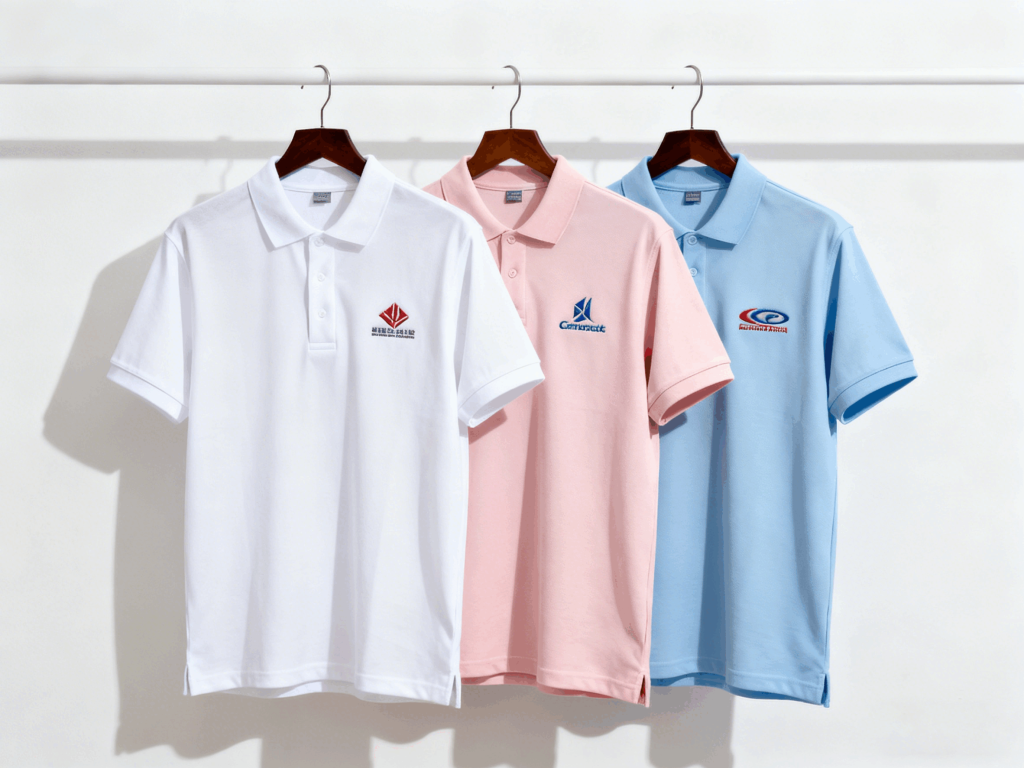
When comparing polo shirt embroidery vs printing, embroidery is generally better for corporate uniforms, small chest logos, and premium polo shirts, while printing is often more suitable for large designs, multicolor graphics, sportswear, and cost-sensitive bulk orders.
Neither method is always better. The right choice depends on your logo size, number of colors, polo shirt fabric, order quantity, budget, and how the garment will be used.
For example, a small company logo on a cotton pique polo often looks professional when embroidered, while a large multicolor design on a lightweight performance polo may be better suited to heat transfer or another printing method.
Understanding the differences will help you choose the right decoration technique for your custom polo shirt project.
What Is Polo Shirt Embroidery?
Embroidery creates a logo by stitching thread directly into the polo shirt fabric.
Before production, the artwork is converted into a digital embroidery file that tells the machine where and how to place each stitch. The final result has a raised, textured appearance.
Embroidery is commonly used for:
- Company logos
- Left-chest logos
- School uniforms
- Golf polos
- Hotel uniforms
- Workwear
- Premium branded polo shirts
One of the biggest advantages of embroidery is its professional appearance. A well-produced embroidered logo can complement the structured look of a traditional polo shirt, particularly on pique fabrics.
Embroidery is also durable because the design is physically stitched into the garment rather than applied only to the fabric surface.
However, embroidery has limitations.
Large designs can become heavy and stiff. Highly detailed artwork may need to be simplified, and higher stitch counts can increase production costs.
For this reason, embroidery is generally most effective for small and medium-sized logos rather than large graphics covering the front or back of a polo shirt.
What Is Polo Shirt Printing?
Printing applies a design to the surface of the garment instead of creating it with thread.
There are several methods used for custom polo shirts.
Screen Printing
Screen printing pushes ink through a prepared screen onto the fabric.
It is particularly suitable for relatively simple graphics and larger production quantities. Once the screens are prepared, the process can be efficient for bulk orders.
The number of colors, print size, and number of print positions can affect the final cost.
Heat Transfer
Heat transfer uses heat and pressure to apply a prepared design to the garment.
It is useful for:
- Names
- Numbers
- Team logos
- Multicolor artwork
- Smaller production runs
Heat transfer can also be suitable for performance garments where heavy embroidery may not be desirable.
DTF Printing
DTF, or Direct-to-Film printing, transfers printed artwork from a film onto the garment.
It can reproduce detailed, colorful graphics and gradients, making it useful for designs that would be difficult to recreate through embroidery.
DTF provides considerable design flexibility for small and medium-sized custom orders.
Embroidery vs Printing on Polo Shirts: Key Differences
The best way to compare embroidery and printing is to look at the requirements of the finished polo shirt.
| Factor | Embroidery | Printing |
|---|---|---|
| Appearance | Premium, textured | Smooth, versatile |
| Durability | Excellent | Depends on method |
| Small Chest Logo | Excellent | Good |
| Large Designs | Less suitable | Excellent |
| Complex Colors | Can increase cost | More flexible |
| Corporate Uniforms | Excellent | Good |
| Sports Polo | Good | Excellent |
| Bulk Orders | Good | Excellent |
If you want a classic professional appearance, embroidery is often the first choice.
If your design is large, colorful, detailed, or needs to remain relatively lightweight, printing may be more practical.
Is Embroidery or Printing More Expensive?
There is no universal answer because decoration cost depends on the design and quantity.
Embroidery pricing is often affected by:
- Logo size
- Stitch count
- Number of colors
- Design complexity
- Number of positions
- Order quantity
A small left-chest logo can be relatively economical, while a large embroidered back design with a high stitch count can significantly increase production time and cost.
Printing costs depend on factors such as:
- Printing method
- Print dimensions
- Number of colors
- Number of locations
- Quantity
- Fabric type
Screen printing can become particularly cost-effective for larger orders because setup costs are distributed across more garments.
Heat transfer and DTF may be more practical for smaller orders or complex multicolor designs.
If price is an important part of your sourcing decision, read our guide on How Much Does It Cost to Customize Polo Shirts? for a broader explanation of fabric, quantity, decoration, and packaging costs.
Which Logo Method Is Best for Different Polo Shirt Fabrics?
Fabric construction can influence how a logo looks and performs.
Cotton Pique Polo Shirts
Cotton pique has the textured surface traditionally associated with polo shirts.
Embroidery works particularly well because the fabric generally has enough structure to support a stitched logo.
Screen printing can also be used, although the textured surface needs to be considered when selecting the artwork and printing process.
If you are developing cotton-based products, explore our Cotton Polo Shirts for more fabric and customization options.
Polyester Polo Shirts
Polyester polos are commonly used for sportswear, uniforms, outdoor work, and performance apparel.
Both embroidery and heat transfer can work depending on the fabric weight and design.
Embroidery is suitable for small professional logos, while heat transfer can be better for lightweight fabrics or larger graphics.
Learn more about Polyester Polo Shirts and their common applications.
Quick-Dry Polo Shirts
Quick-dry polo shirts are designed to remain lightweight and manage moisture efficiently.
Heavy or extremely dense embroidery can affect the feel of lightweight performance fabrics, so smaller and lighter embroidery designs are generally preferable.
Heat transfer is another practical option for detailed logos and sports-related graphics.
See our Quick Dry Polo Shirts for performance fabric options.
Cotton-Polyester Blend Polo Shirts
Cotton-polyester blends are versatile and can work with several decoration techniques.
Depending on the fabric structure, buyers can consider embroidery, screen printing, heat transfer, or DTF.
The final choice should be based on the artwork, fabric weight, order quantity, and intended use.
Already Have Your Logo? Start With a Ready-Stock Polo
Choose an existing polo style and add your logo with embroidery, heat transfer or printing. Ideal for businesses, teams and brands that need faster production without developing a polo shirt from scratch.
View Ready Stock Polo Shirts →Best Logo Method for Corporate Polo Shirts
For corporate uniforms, embroidery is usually one of the strongest options.
A small embroidered logo on the left chest provides a clean, professional appearance suitable for offices, hotels, restaurants, sales teams, and service businesses.
Embroidery is also suitable when uniforms will be worn and washed frequently.
If the corporate design is large or contains detailed graphics, printing can still be considered. However, for traditional company logos, chest embroidery remains a popular solution.
Best Logo Method for Sports and Quick-Dry Polo Shirts
Sports polos require a different approach.
Performance garments are often made from lightweight polyester fabrics designed for breathability and moisture management.
Large, dense embroidery may add unnecessary weight to these garments.
For sports teams, golf events, and outdoor applications, consider:
- Lightweight embroidery for small chest logos
- Heat transfer for names and numbers
- DTF for colorful graphics
- Printing for larger designs
The decoration should complement the performance characteristics of the garment rather than interfere with them.
Best Logo Method for Promotional Polo Shirts
Promotional polo shirts are often produced in larger quantities and may have tighter budget requirements.
Screen printing can be attractive for relatively simple designs and high-volume orders.
Heat transfer and DTF provide flexibility for smaller quantities or multicolor artwork.
Embroidery can still be used when the promotional product needs a more premium appearance, but the logo size and stitch count should be controlled to keep costs reasonable.
How to Choose Between Embroidery and Printing
Before selecting a logo technique, consider six important factors.
Logo Size: Small chest logos are excellent candidates for embroidery. Large front or back graphics are generally better suited to printing.
Logo Colors: Simple logos work well with either technique. Complex multicolor artwork, gradients, or photographic details are easier to reproduce with certain printing methods.
Fabric: Heavy pique fabrics can support embroidery well, while lightweight performance fabrics may benefit from lighter decoration techniques.
Quantity: Screen printing can become more cost-effective at larger quantities, while DTF and heat transfer provide flexibility for smaller runs.
Budget: Compare the total decoration cost based on the actual artwork rather than assuming one method is always cheaper.
End Use: Corporate uniforms, sportswear, promotional apparel, and retail fashion all have different visual and performance requirements.
If you are unsure, send your manufacturer the artwork, garment fabric, required quantity, logo dimensions, and intended application. They can recommend an appropriate technique before sampling.
Frequently Asked Questions
Is embroidery better than printing on polo shirts?
Embroidery is often better for small logos, corporate uniforms, and premium polo shirts. Printing is generally better for large, detailed, or multicolor graphics. The best option depends on the design and garment.
Does embroidery last longer than printing?
Embroidery is highly durable because the design is stitched into the fabric. Printing durability varies depending on the printing technique, materials, fabric, washing conditions, and production quality.
Can you embroider polyester polo shirts?
Yes. Polyester polo shirts can be embroidered, especially for small chest or sleeve logos. The embroidery density and stabilizer should be appropriate for the fabric.
What printing method is best for polo shirts?
There is no single best method. Screen printing is useful for bulk orders and simpler graphics, while heat transfer and DTF are flexible for detailed or multicolor designs.
Is embroidery suitable for large logos?
It is possible, but large embroidery can become heavy, stiff, and expensive because of the increased stitch count. Printing is often more practical for very large graphics.
Can I order polo shirts with different logo methods?
Yes. A polo shirt can use more than one decoration technique. For example, a brand might use embroidery on the chest and printing on the back or sleeve, depending on the design.
Final Thoughts
When comparing polo shirt embroidery vs printing, neither method is universally better.
Choose embroidery when you want a premium, textured appearance for a small company logo, uniform, golf polo, or branded garment.
Choose printing when you need larger graphics, detailed colors, sports designs, promotional production, or greater flexibility with artwork.
Most importantly, consider the logo size, colors, fabric, quantity, budget, and end use together.
The best decoration method is not simply the cheapest or most premium option—it is the technique that works best with the polo shirt and delivers the appearance, durability, and cost structure your project requires.