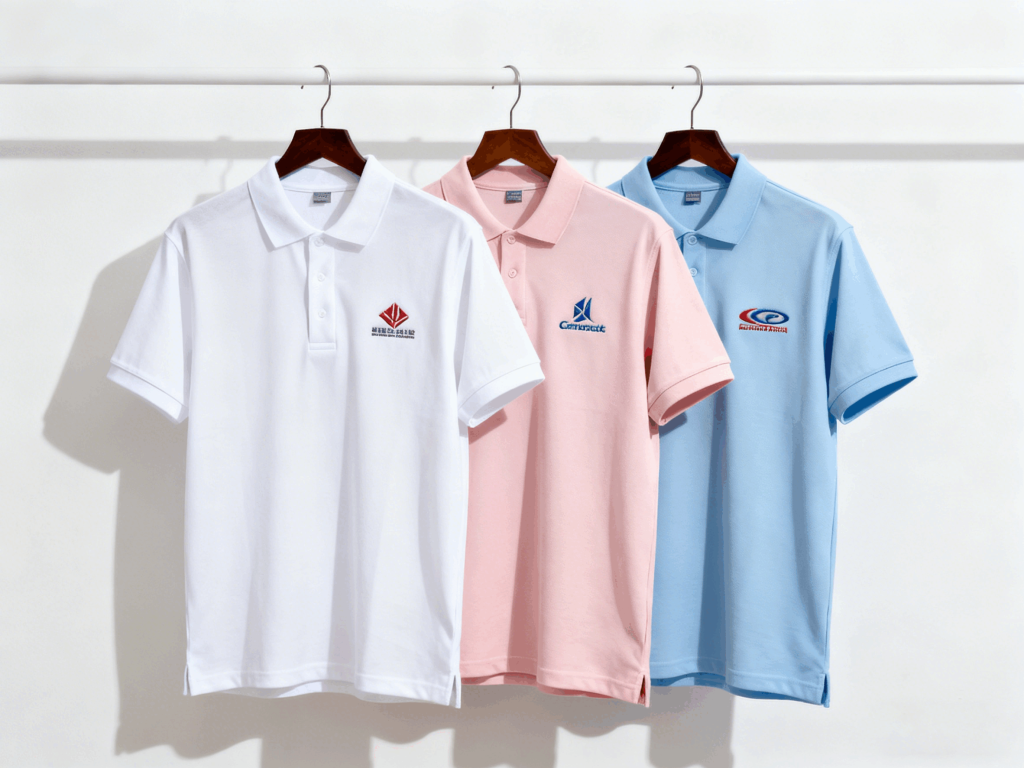
Embroidery or printing? For a small company logo on a polo shirt, both can work. The better choice depends on your artwork, the fabric, the size of the design, and how employees will use the garment. Decide those details before comparing prices.
A simple chest emblem may suit embroidery, while a detailed multicolor graphic may be better reproduced with an appropriate print process. Neither method guarantees a good result on every polo. The most useful comparison is a decorated sample of the shirt you actually plan to order.
When Embroidery Makes Sense
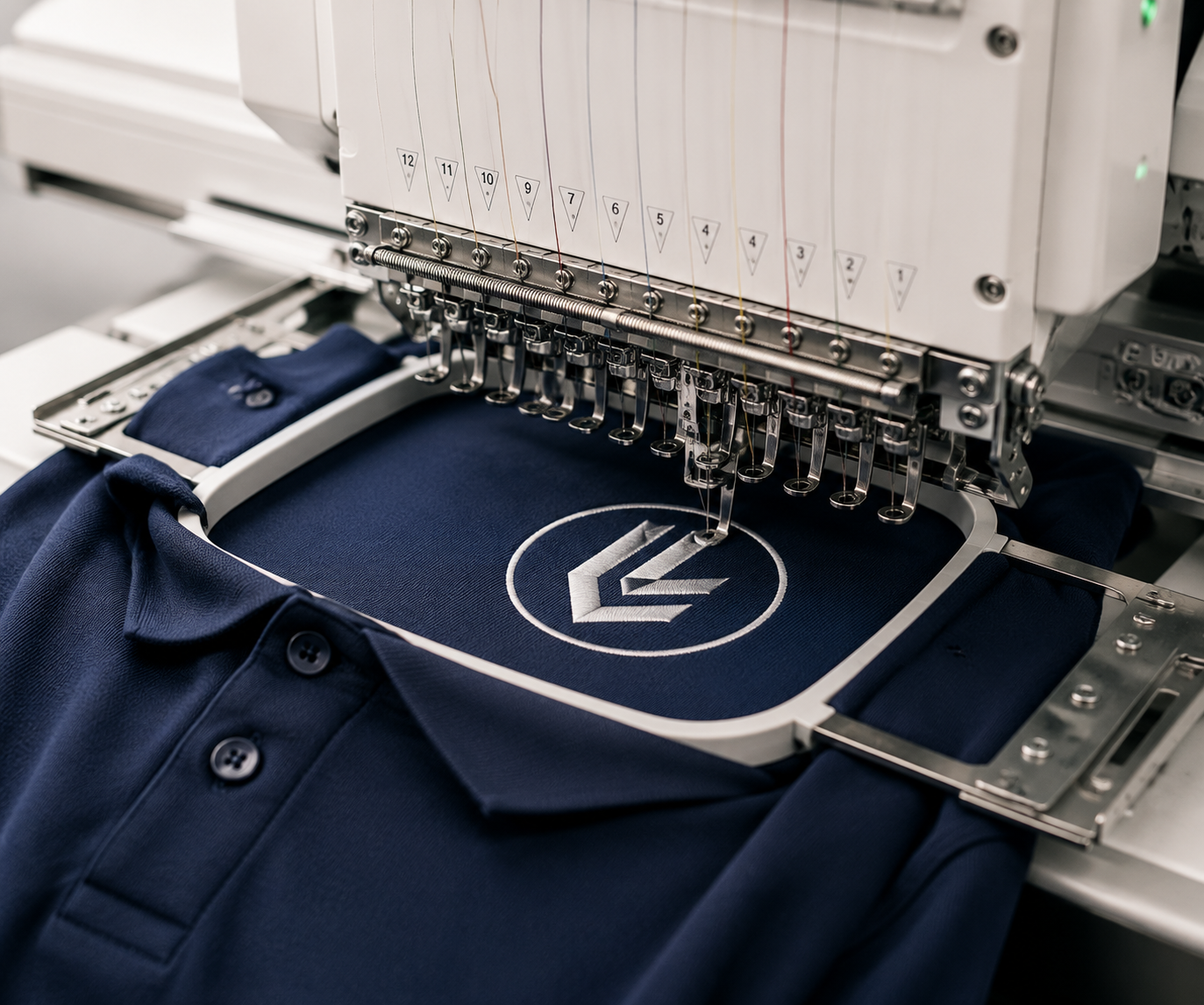
Embroidery builds the logo with stitched thread, creating a raised surface that catches the light. It is worth considering for compact chest logos, initials, and clear symbols on company uniforms. Thread colors and stitch direction give the artwork a different appearance from a flat printed design.
The original artwork must be converted into stitch instructions, a process called digitizing. Very small lettering, narrow gaps, and fine lines may need adjusting. Ask to see the logo at its intended finished size, rather than approving an enlarged screen preview.
Also check the fabric around the design. Dense stitching can affect how a lightweight or stretchy polo hangs. Correct digitizing, stabilization, and machine setup matter. Madeira’s embroidery troubleshooting guidance identifies fabric flexibility and stitch settings among the factors behind puckering.
Printing Is More Than One Method
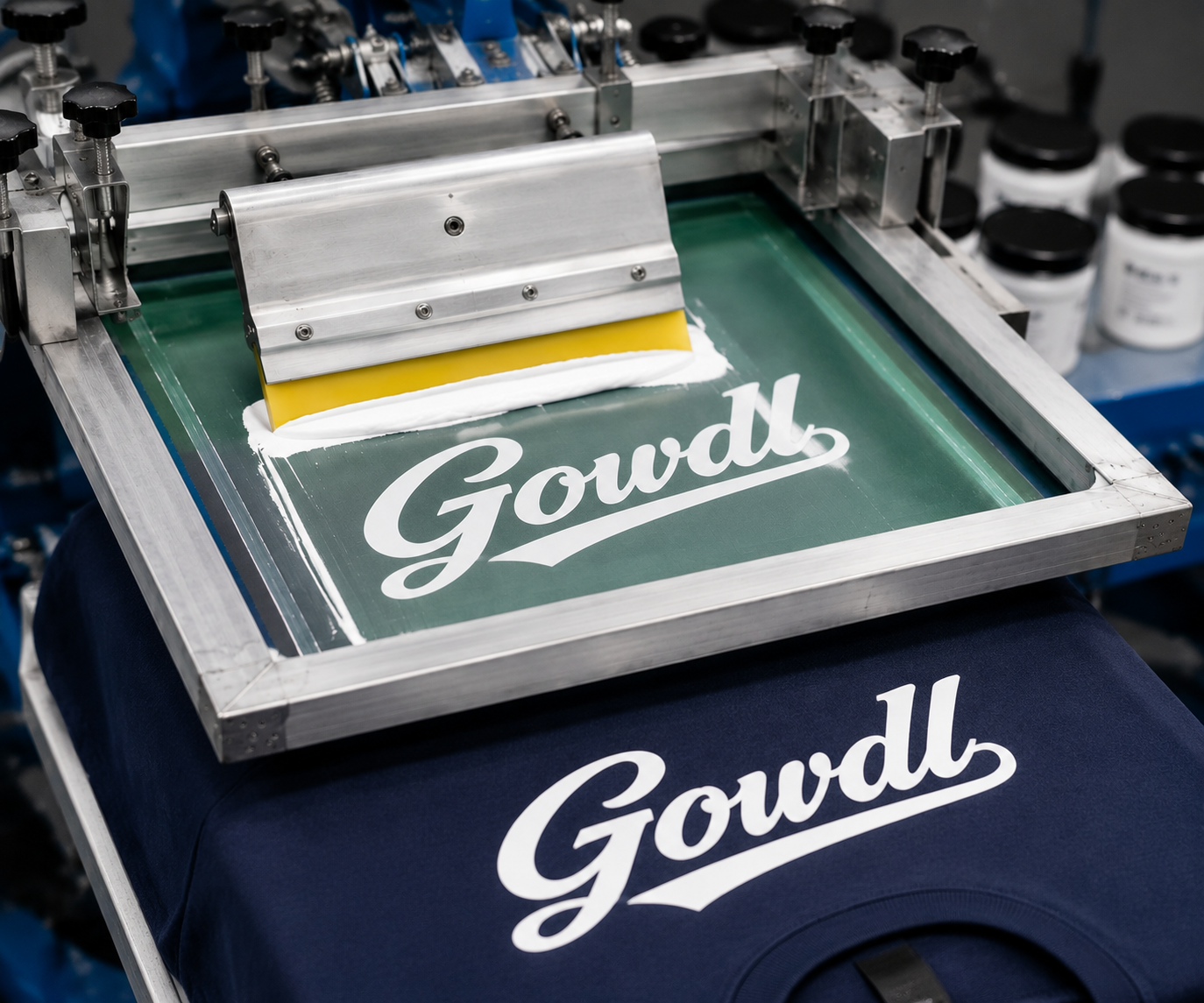
Ask what the supplier means by “printing.” Screen printing, digital transfers, and cut heat-transfer materials have different setup requirements, finishes, and limitations. A quote that only says “printed logo” is missing information you need.
Screen printing applies ink through a prepared screen. It is worth quoting for repeated designs, particularly when the artwork uses a manageable number of solid colors. Color separations and setup affect the economics, so compare the complete job at your actual quantity.
Digital transfers, including suitable DTF options, can be useful for detailed multicolor artwork. Check fine lettering, the feel of the applied layer, and how it behaves when the garment stretches. Large solid areas can feel different from small, separated design elements.
Heat-transfer vinyl can suit simple lettering or shapes. Material selection and application settings must match the garment. With polyester polos, discuss heat sensitivity and dye migration; STAHLS’ guidance on decorating performance wear highlights these issues. Do not assume every transfer is suitable for every fabric.
Match the Logo to the Polo Fabric
Start with the exact garment model. A textured piqué knit, a smooth jersey, and a lightweight stretch fabric provide different surfaces. Fiber content alone does not tell you how a logo will look. Knit structure, thickness, finish, and stretch also matter.
For embroidery, inspect the edges of the stitching and any rippling around it. For printing, check whether the surface texture interrupts small details. With either method, look at the shirt while worn as well as laid flat. A neat sample on a table can behave differently across the chest.
If you are still choosing the garment, our cotton versus polyester polo shirt guide offers a starting point for the fabric discussion.
Compare Costs Using the Same Brief
There is no useful universal answer to “Is embroidery cheaper than printing?” Embroidery pricing can depend on digitizing, stitch count, design size, and order quantity. Print pricing depends on the process, colors, placement, setup, and quantity. Extra logo locations add work with either method.
Send each supplier the same artwork, finished dimensions, placement, garment model, and quantity. Ask whether the quotation includes setup and sample approval. Separate garment costs, decoration, packing, and delivery so you can see what changes between options.
Approve a Sample Before the Team Order
Check readability at normal viewing distance, color against the garment, placement, and comfort against the skin. Inspect the reverse of embroidered areas and the edges of transfers. Confirm measurements rather than describing the logo as “standard chest size.”
Agree on a wash check using the proposed care instructions. After drying, inspect the logo and surrounding fabric again. Durability depends on materials, application quality, and care, so avoid relying on an unsupported promise of a fixed number of washes.
Choose a Ready-Stock Polo, Then Confirm the Logo
Browse GOWDL’s ready-stock polo shirts to shortlist a garment before finalizing decoration. For a contrast-trim option, view the MW-6203 company uniform polo and compare its style and size chart with your team’s needs.
Send us your selected model, colors, size quantities, logo file, required logo dimensions, and arrival date. We can discuss the decoration options for that combination and prepare a quotation. Confirm current stock, sample arrangements, and the complete order details before placing your order.
Use the form below to request a polo and logo review. A clear brief makes it easier to compare the right options and avoid changes after production begins.