A useful fishing vest keeps small essentials within reach without getting in the way when you cast, bend, or sit down. To choose one, start with the equipment you actually carry, then check the pocket layout, fit over your clothing, and fabric construction. Pocket count alone tells you very little.
This guide focuses on storage and utility fishing vests. These garments are not a substitute for a suitable life jacket or personal flotation device. Keep flotation requirements separate from your choice of pockets and clothing.
Start with What You Need to Carry
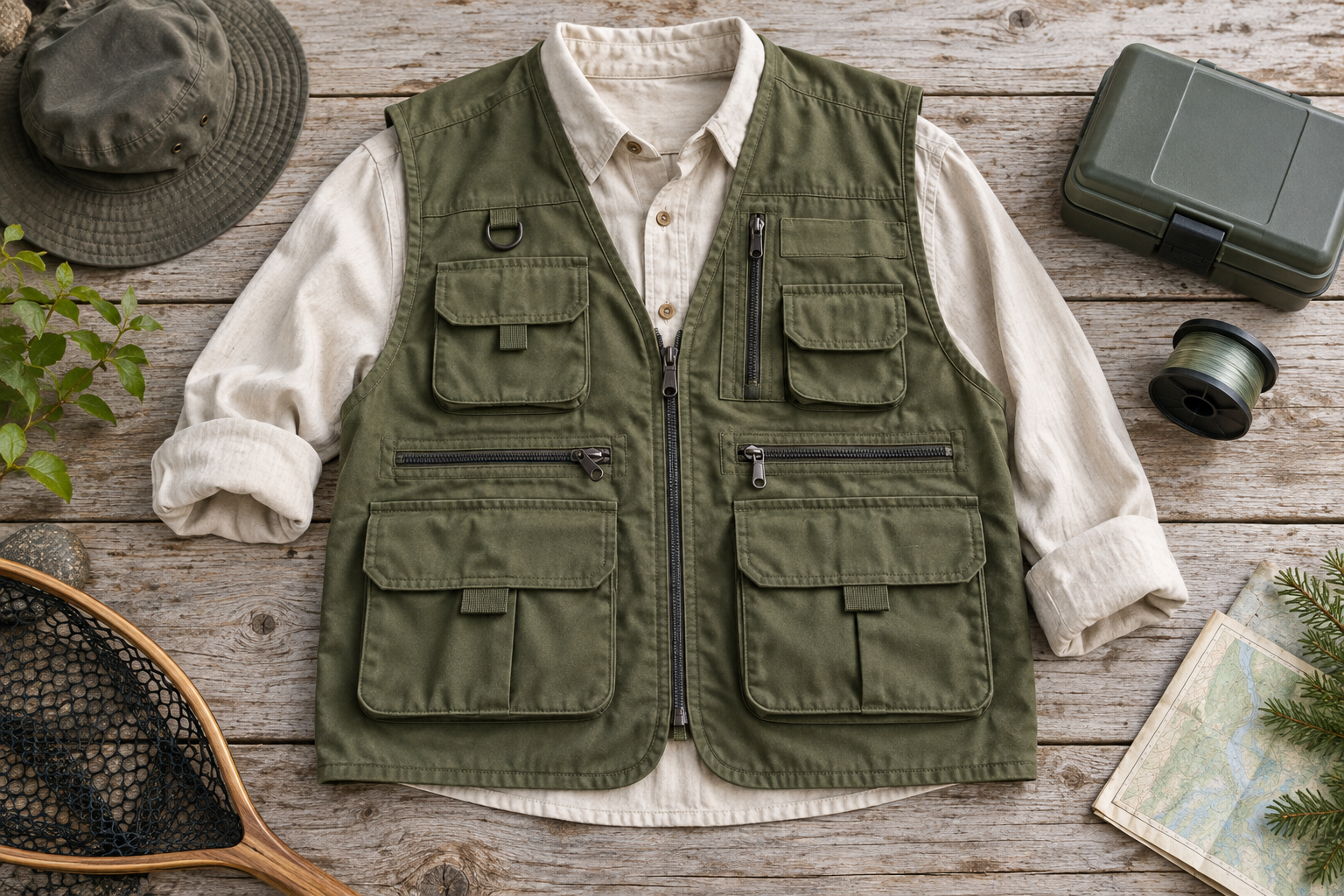
Lay out your usual small tackle boxes, line spools, and other accessories before comparing vests. Measure the largest items you expect to put in a pocket. A wide-looking compartment may have a narrow opening or lose usable space around its closure.
Decide which items you need frequently and which can stay in a separate bag. Carrying everything on your chest can make an otherwise comfortable vest awkward. Try a realistic load, with weight spread across both sides, rather than filling every pocket simply because it is there.
Also consider your fishing style. A general utility vest may provide useful storage for bank fishing or club activities, while a specialist design may have features better suited to your particular technique. Compare those features explicitly instead of relying on the product name.
Judge Pocket Layout by Access, Not Quantity
Open and close the pockets while wearing the sample. Can you reach the contents without twisting the vest around? Can you operate the pulls with the clothing or gloves you normally wear? Check that a loaded lower pocket does not press into your lap when seated.
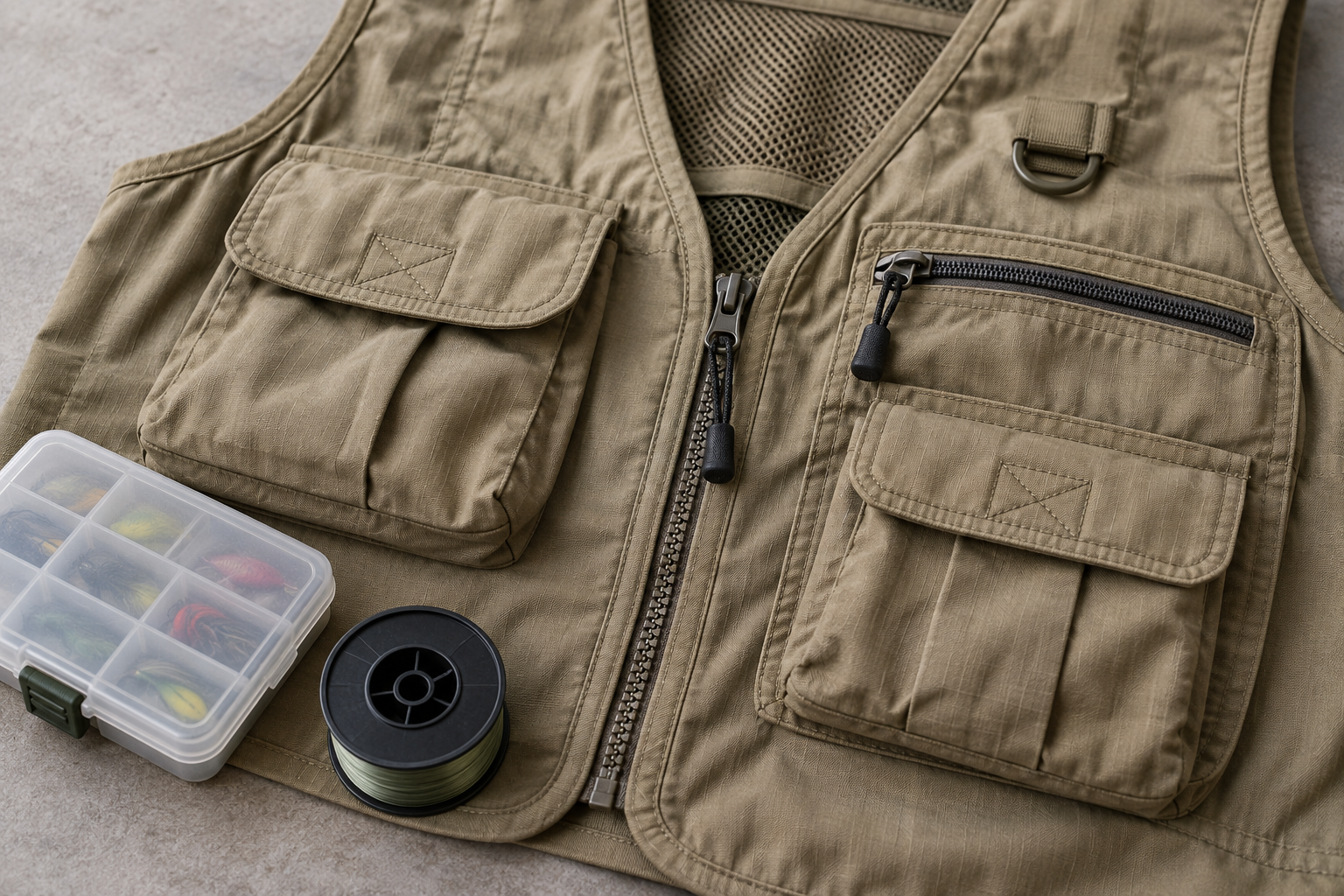
Flap pockets and zipped compartments serve different preferences. Inspect the opening, depth, closure, and stitching at the pocket corners. Test access with the actual tackle box you intend to carry. Keep sharp tackle contained rather than loose inside garment pockets.
Small attachment points can be useful, but verify their intended purpose and construction. Do not assume a decorative loop can support a heavy tool. Keep dangling accessories from interfering with line handling or normal movement.
Check the Fit with Pockets Loaded
Try the vest over the shirt or jacket you expect to wear underneath. Zip it fully, then reach forward, raise your arms, bend, and sit down. Look for pulling across the chest, rubbing at the armholes, or a hem that catches against your thighs.
Repeat those movements with your normal pocket contents. An empty vest can feel comfortable while the same garment shifts or sags under a load. Check the shoulders and front closure again after a few minutes of wear.
Use the selected model’s measurement chart rather than ordering by your usual size alone. Ask how chest measurements are taken and allow for the intended layers. For a club order, collect each person’s size against the same chart and arrange sample try-ons where practical.
Look Beyond the Fabric Name
Polyester, cotton, and blended fabrics can appear in utility vests, but fiber content does not establish every performance feature. Fabric weight, weave, lining, ventilation, and finishing affect the garment too. Handle a sample and inspect its construction.
Do not assume a polyester vest is waterproof or that a zip pocket will keep electronics dry. If water resistance, drying performance, or another specific property matters, ask what the supplier claims and how it is supported. Use suitable separate protection for items that must stay dry.
For warm-weather wear, inspect the overall coverage and any ventilation features. A sleeveless cut leaves the arms free, but it does not by itself prove that the loaded vest will feel cool. Evaluate it with your normal clothing in the intended conditions.
Inspect Zippers, Seams, and Care Instructions
Run the main zipper and pocket zippers through several opening and closing cycles. Look for snagging fabric, uneven stitching, and loose threads. Check the inside of the garment as well as the outer face, especially around heavily used pockets.
Review the care instructions before ordering. Empty all compartments before cleaning and follow the garment’s directions. For a bulk purchase, agree on a sample check after washing and drying, including fit, closures, and any added logo.
Choosing Fishing Vests for a Club or Team
For a ready-stock starting point, view GOWDL’s FJ-8811 fishing and outdoor utility vest. The product page lists 100% polyester, a front zipper, and multiple flap and zipper pockets. Compare the actual photos and measurements with your equipment and clothing needs.
Before adding a club logo, confirm an available decoration area that will not interfere with pockets or closures. Send the artwork, desired dimensions, placement, and quantities by size and color. Ask for the garment, logo work, packing, and delivery to be quoted clearly.
Browse ready-stock vests and shortlist a model for your team. Confirm current availability and request a sample before placing the bulk order. Use the form below to share your requirements and obtain a quotation.