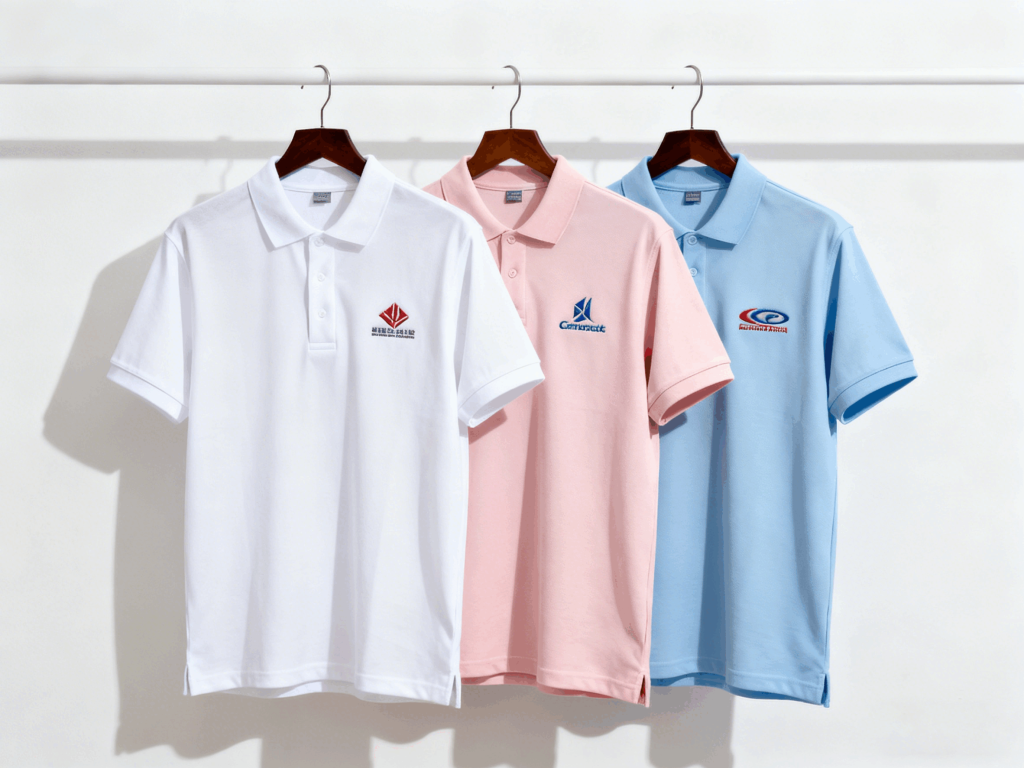
A logo can look balanced on a screen and awkward once it is printed on a T-shirt. Placement, print size, garment fit, and the wearer’s movement all affect the result. Before ordering custom shirts for a brand, team, or event, decide where the logo should sit and check it on a sample in the actual garment size.
Common T-Shirt Logo Positions
Left chest: A small mark on the wearer’s left chest is a familiar choice for staff shirts, uniforms, and understated brand basics. It leaves most of the front open and works well for a concise logo. Check that the design does not sit too close to the collar, armhole, or side seam.
Center chest: A centered design is easy to notice and suits short wordmarks or compact graphics. Keep the artwork’s visual center aligned with the garment, not simply the edge of the file. Extra transparent space in the file can make a correctly aligned print appear off-center.
Full front: A larger front print gives an illustration or campaign graphic room to breathe. Consider how it will look while the shirt is worn and how much of the design curves around the body. Very wide artwork can distort near the sides.
Upper back or full back: Back prints work for event names, team graphics, and larger artwork. A small front mark paired with a back design can provide both identification and visual impact. Check that backpack straps, hair, or uniform layers will not cover the key details.
Sleeve: Sleeve logos add a secondary brand detail, but the printable area is narrow and changes with sleeve length and cut. Confirm the placement on both regular and oversized fits if the order includes different silhouettes.
Choose Placement by Purpose
For workwear, favor a position that remains visible during normal tasks and does not compete with name badges or safety equipment. For a retail design, think about how the shirt looks from the front and back when styled. For an event tee, prioritize readable wording and a graphic that can be seen at a practical distance.
Placement also depends on the garment. A dropped shoulder moves the sleeve seam and changes the visual center of a chest print. A pocket, ribbed panel, or seam can limit the flat area available for decoration. Review the actual custom T-shirt styles and confirm the measurements of your chosen model before finalizing artwork.
How to Check Print Size and Position
Send the supplier the artwork, print dimensions, placement reference, and garment model. Ask for a mockup that shows the design on the actual shirt shape. A mockup is useful for layout, but a physical sample is better for checking scale, color, print feel, and how the design sits when worn.
Try the sample on a wearer or dress form that represents the intended audience. Look at it from normal viewing distance, raise the arms, and check whether the design folds, disappears, or shifts visually. If the order includes several sizes, confirm whether one fixed print size will be used or if placement and scale need adjustment across the size range.
Before production, approve one written reference showing the garment, print size, position, and any allowed tolerance. That keeps the finished order aligned with the design everyone approved.
Frequently Asked Questions
Where should a small company logo go on a T-shirt?
A left-chest position is a common starting point for a small logo. Confirm its size and distance from seams on the specific garment before printing.
Should the logo be the same size on every T-shirt size?
That depends on the design and the size range. Ask to review the smallest and largest sizes so the logo remains proportionate and clear.
Good T-shirt logo placement starts with the wearer and the garment, not just the artwork file. Choose a position for the job, check it on a sample, and approve the final dimensions before placing a bulk order.