
When autumn stays warm, a warehouse full of heavy jackets can become a costly bet. That is the buying question raised by the unusually warm weather around Paris Fashion Week in October 2026. The event on September 28–October 6 presented Spring/Summer 2027 womenswear, according to the Fédération de la Haute Couture et de la Mode calendar; it was not an autumn/winter runway season. Still, the weather during the shows put an immediate commercial problem in focus: when should buyers commit to winter outerwear?
Quick answer: A warmer early autumn favors a more flexible jacket assortment. Put climate-appropriate lightweight layers on sale when customers can wear them, keep a measured insulated range for colder regions, and agree on replenishment dates before demand arrives. Your own sales history, lead times and market matter more than a single week of weather in Paris.
What the Paris Fashion Week news actually tells buyers
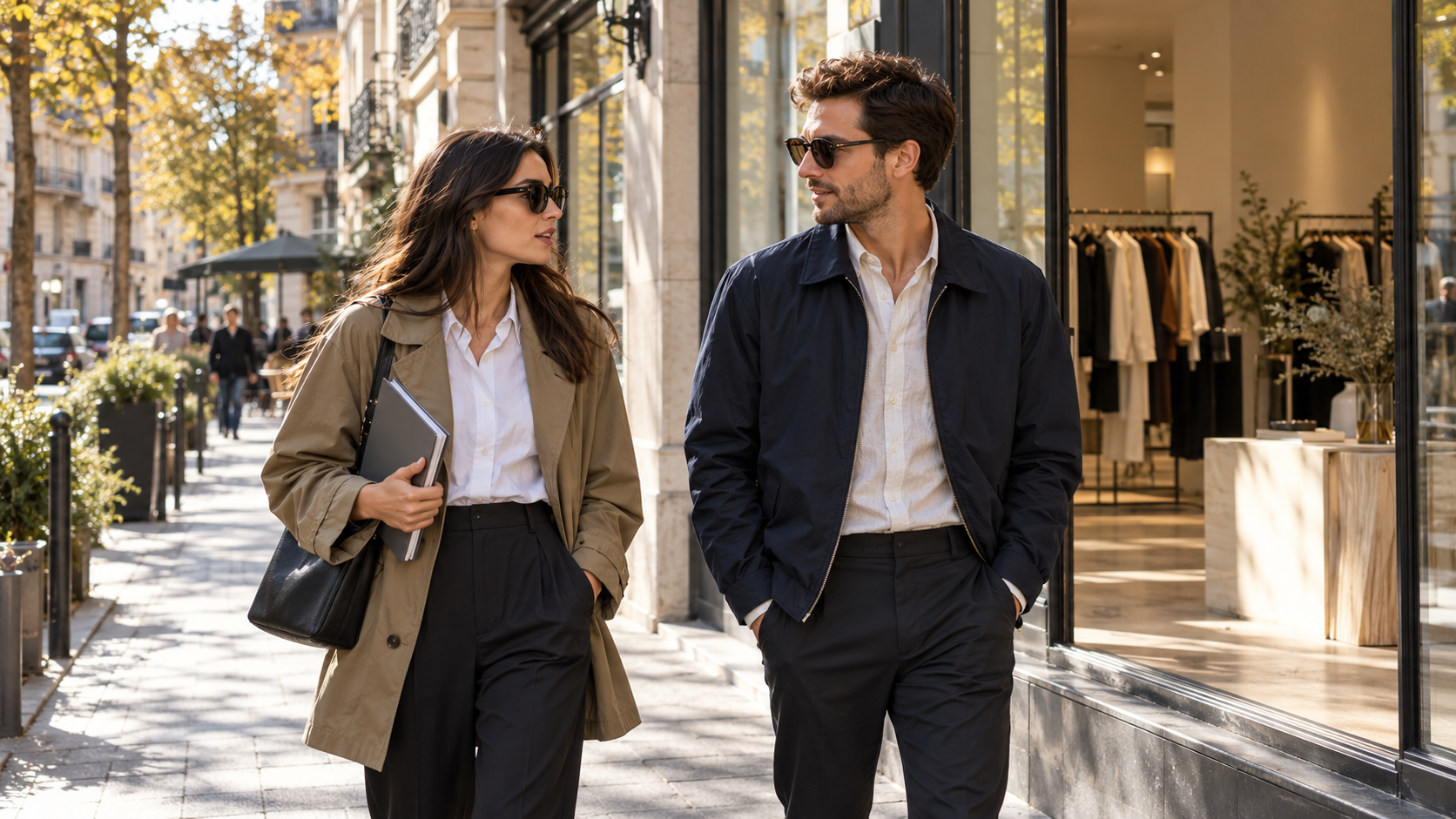
Reuters reported that temperatures reached about 28°C in Paris during the fashion-week period. Its reporting described a mismatch between warm autumn shopping conditions and traditional winter coat deliveries, with the potential for excess stock and markdowns. That is a warning about timing and assortment, not proof that every market should stop ordering warm jackets.
There is also a regional distinction. The U.S. Climate Prediction Center’s September 2026 outlook favored above-normal temperatures across many U.S. areas for October–December. A seasonal outlook describes probabilities over a broad period; it cannot tell a retailer the temperature on a particular delivery date. Buyers should pair it with local forecasts and last year’s sell-through.
How warmer autumns change wholesale jacket orders
The strongest change is often when a style is delivered. A windbreaker or unlined bomber can earn its place in an early drop when daytime temperatures are mild. A thick insulated jacket still has a role, but a large early shipment can tie up cash before shoppers feel the need for it. For retailers serving several climates, one national allocation is especially risky: a coastal store and a mountain store may need different weights of outerwear in the same week.
Think of the assortment as a ladder rather than one seasonal launch:
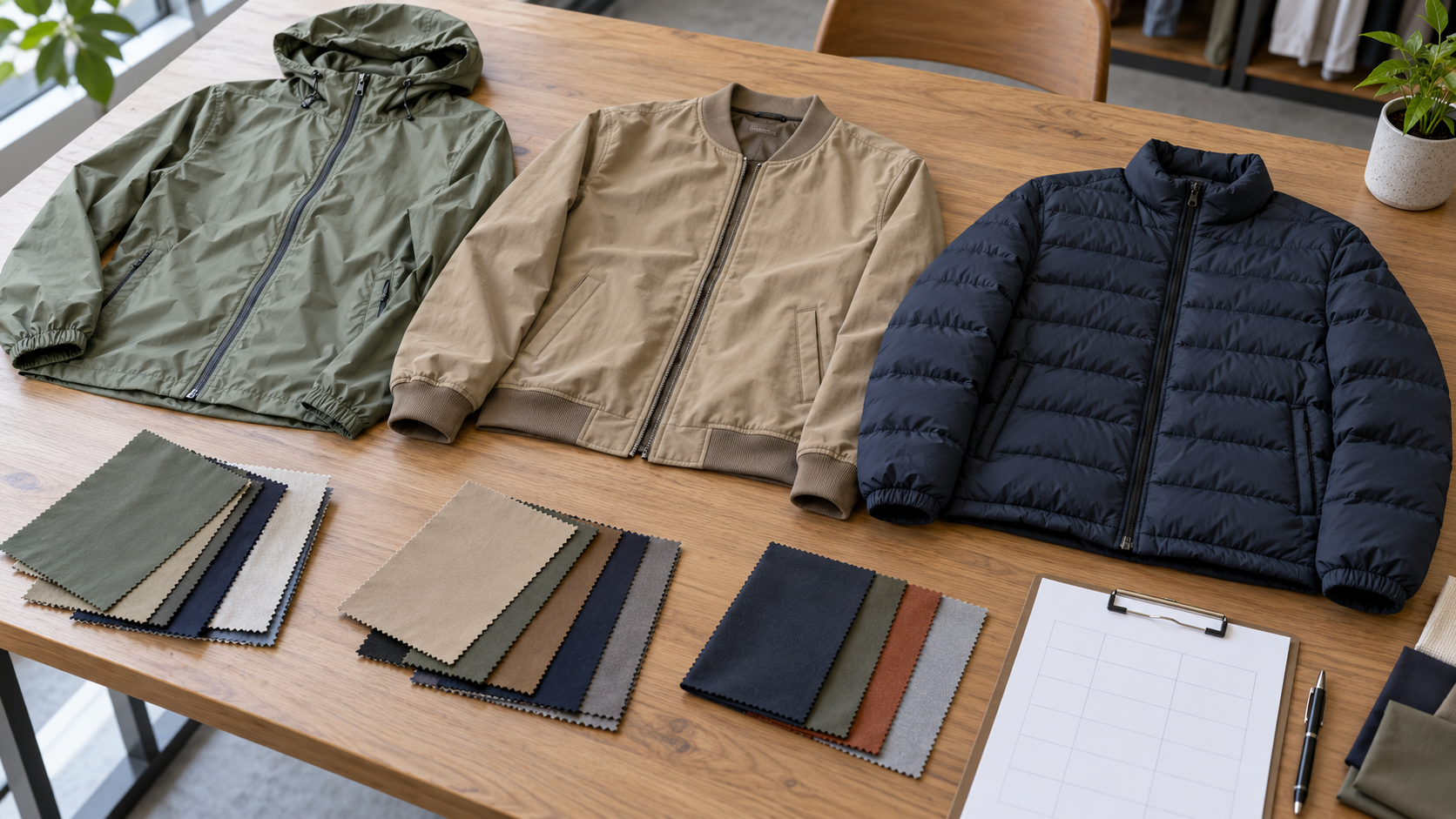
| Jacket type | Likely customer use | Wholesale planning question |
|---|---|---|
| Light shell or windbreaker | Warm days, wind, light rain, commuting | Can this arrive early and be worn immediately? |
| Unlined bomber or midweight jacket | Cool mornings and changeable weather | Does it bridge the gap between a tee and a winter coat? |
| Insulated or padded jacket | Consistently cold days and colder regions | What is the latest sensible delivery and reorder date? |
This is a buying framework, not a recommended percentage split. Review prior conversion, returns, stock-outs and markdowns by region before setting quantities.
A practical buying plan for a clothing brand
1. Separate the first delivery from the cold-weather reserve
Buy the styles that fit your normal early-autumn conditions for the first shipment. Discuss a second delivery window for insulated pieces instead of assuming all jacket inventory must land together. Ask the supplier which fabrics and trims need to be committed early, even if finished jackets ship later.
2. Build the range around real wearing occasions
A commuter who needs wind protection is shopping for a different solution from a customer planning a winter trip. Product pages should state shell fabric, lining, water resistance and intended temperature use in plain language. Avoid calling a lightweight shell a winter jacket just because it sits in the outerwear category.
3. Set reorder triggers before the season starts
Agree on sample approval, minimum order quantities, production time and shipping time before a cold snap creates urgency. Then watch weekly sell-through and local forecasts. If a reorder would arrive after your peak selling window, a smaller initial order may be safer than relying on a late top-up.
4. Test fabric and fit, not just the forecast
Request samples in the intended shell weight and lining. Check movement, zipper quality, pocket placement and size consistency. If a jacket claims rain protection, ask for the actual fabric finish and care instructions; do not assume every windbreaker is waterproof.
What to ask a jacket manufacturer now
Ask for a quote across two or three weights of the same design, plus the delivery options for each. Compare the total cost of a light shell, a transitional bomber and a lined version. That makes the buying decision about usable product, not just the unit price of one heavy style.
GOWDL’s custom jacket manufacturing options are a starting point for discussing fabrics, branding and construction. If your range needs a versatile midweight silhouette, review the custom bomber jacket options. For a faster-selling program, check current ready-stock jackets and confirm available colors, sizes and quantities before promoting them.
FAQ
Should wholesale buyers stop ordering winter jackets?
No. Cold-weather demand has not disappeared, and it varies by region. The useful response is to challenge the timing and size of the first heavy-jacket commitment, then keep a realistic plan for cold-weather delivery.
Are lighter jackets always the better choice for autumn 2026?
No. A seasonal temperature outlook is not a store-level sales forecast. Use your customers’ location, historical sales, product purpose and supplier lead time to decide the mix.
What is the first question to ask a supplier?
Ask which material choices and order deadlines preserve flexibility. A lighter fabric is only useful if the finished jacket meets your buyers’ expectations for fit, durability and weather protection.
Planning a jacket collection for a warmer, less predictable autumn? Explore GOWDL’s custom jacket manufacturing and request options for lightweight and transitional outerwear that suit your market.
