
The main difference between oversized and regular-fit T-shirts is the pattern, not simply the size label. Regular fit generally follows the body with moderate room. Oversized fit deliberately adds volume through features such as a wider body, dropped shoulders, or larger sleeves. Exact proportions vary by brand and model.
Choose regular fit if you want a familiar silhouette that sits neatly under other clothes. Consider oversized if you want the T-shirt to create a looser shape of its own. Before buying either, compare measurements with a shirt you already like.
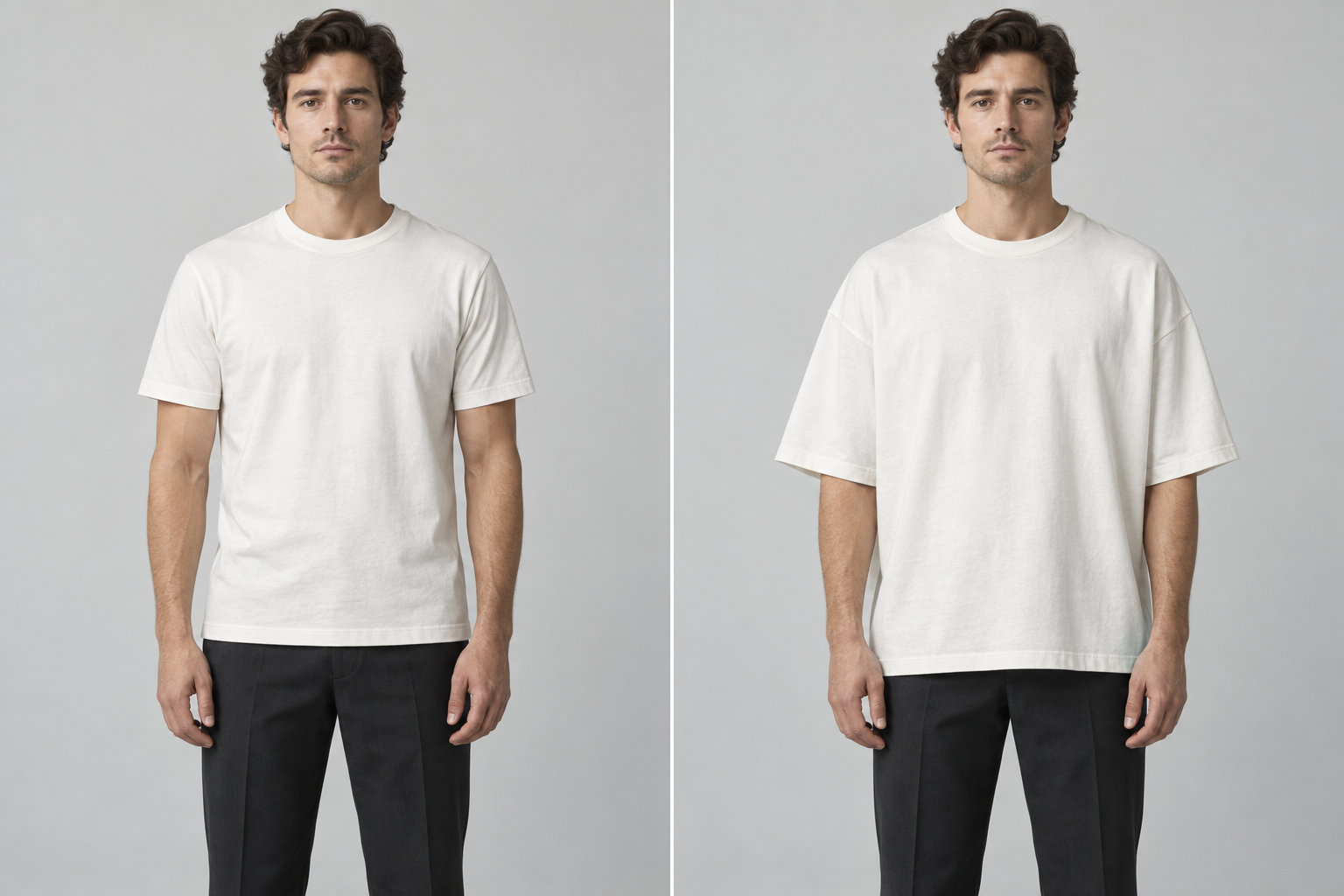
Oversized vs Regular Fit: Quick Comparison
| Feature | Regular fit | Oversized fit |
|---|---|---|
| Shoulder line | Often closer to the natural shoulder | Often deliberately dropped |
| Body width | Moderate room around the torso | More intentional volume |
| Sleeves | Usually a more conventional proportion | Often wider, longer, or both |
| Body length | Varies by model | May be cropped, standard, or long |
| Layering | Often easier under a close-fitting layer | Needs an outer layer with enough room |
1. Shoulder Seams Change the Outline
On many regular-fit tees, the shoulder seam sits near the natural shoulder. On a dropped-shoulder oversized design, it sits farther down the upper arm. That changes how the sleeve hangs, even before you compare chest width.
Look at the seam while standing naturally, not just in a posed product photo. A dropped seam can be intentional. The useful question is whether the rest of the garment supports that shape and lets you move comfortably.
2. Extra Width Does Not Have to Mean Extra Length
A boxy oversized tee can be wider without being much longer. A longline tee adds length and may create a different look. These labels are not interchangeable, and neither tells you the complete measurements.
Check where the hem lands with the trousers you plan to wear. Sit down and raise your arms as well. If you like the width but dislike the length, look for a different cut rather than assuming a smaller size will solve both.
3. Sleeves Affect the Overall Proportion
Oversized sleeves often have more volume or reach farther down the arm. Regular sleeves generally make a quieter part of the silhouette. Sleeve opening, length, and shoulder placement work together, so comparing only the sleeve length can be misleading.
Try the shirt with your arms relaxed and then extended forward. Check whether the sleeve opening feels comfortable and whether the underarm area bunches. There is no universal sleeve endpoint that works for every wearer or design.
4. Fabric Changes How Both Fits Hang
The same pattern can look different in a soft, fluid fabric and a firmer, more structured one. Oversized does not mean heavyweight, and regular fit does not mean thin. Treat cut and fabric as two separate buying decisions.
Inspect the garment in motion, not only laid flat. If you want a structured outline, ask for a sample that demonstrates it. If you prefer softer folds, say so in your brief. Fabric weight alone does not establish the finished drape.
5. Layering and Graphics Need Different Checks
A regular-fit tee may be easier to wear beneath a closely cut jacket. With an oversized tee, check that the outer layer accommodates the wider sleeves and body. Neither choice is automatically more comfortable in every outfit.
For printed merchandise, compare the artwork on the actual garment dimensions. A chest graphic can look small on a broad body, while a large design may sit differently as the fabric folds. Approve placement and scale on the selected model, not just on a generic mockup.
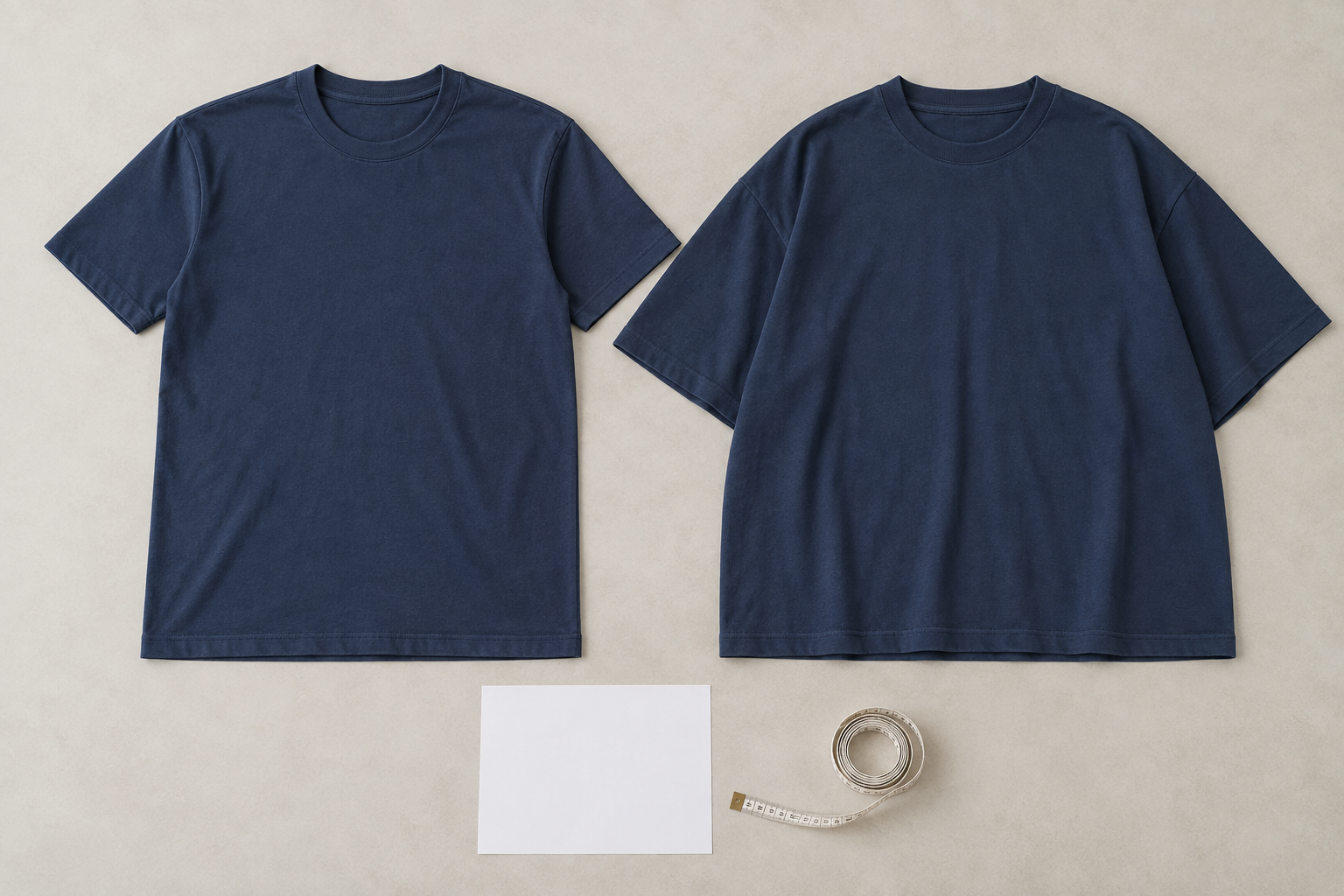
How to Choose Your Size Without Guessing
Take a T-shirt whose fit you like and lay it flat without stretching it. Following the supplier’s measurement method, record chest width, body length, shoulder width, and sleeve dimensions. Check whether the chart describes garment measurements or body measurements before comparing numbers.
Compare the proposed shirt with that reference, then decide where you want more or less room. Ask about measurement tolerances and try a sample when possible. For bulk orders, collect sizes against the selected model rather than carrying over another brand’s size list.
Common Questions Before You Buy
Can I just size up a regular T-shirt? You can experiment, but it may add length or change the neckline and sleeves in ways you do not want. A deliberately oversized pattern offers a different balance of proportions.
Should I size down in an oversized T-shirt? Not automatically. Some brands build the intended loose fit into your usual size. Use the model’s measurements and fit guidance instead of a universal rule.
Which fit is better for a clothing brand or team? Choose around your audience and intended use. Review representative samples and feedback before placing a large order; a fashionable label alone is not evidence that the fit suits your customers.
Find a T-Shirt That Matches Your Brief
Browse GOWDL’s ready-stock T-shirts and compare each model’s photos and size chart. Confirm the actual cut rather than assuming a listed garment is oversized. Ask for a sample and current stock availability before ordering.
If you need a specific boxy cut, dropped shoulder, or body length that existing stock does not offer, explore our custom cotton T-shirt options. Send reference measurements, fabric preferences, colors, quantities, and artwork through the form below to discuss your project and request a quotation.
