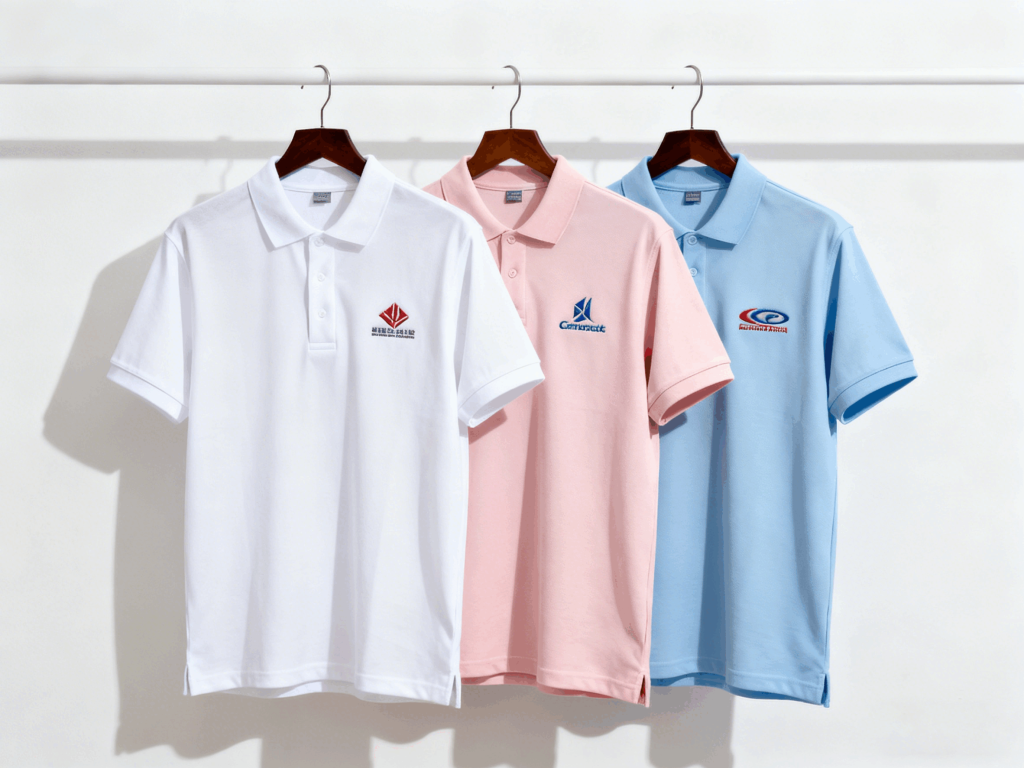
Custom polo shirts are widely used by clothing brands, companies, sports teams, schools, hotels, restaurants, and promotional organizations. Compared with a standard blank polo, a customized polo shirt allows you to control the fabric, color, fit, logo, labels, and other details to create a product that matches your brand or specific application.
But how to customize a polo shirt correctly?
The process involves more than simply adding a logo to a blank shirt. Depending on your order quantity, budget, and design requirements, you can choose between ready-stock polo shirt customization and full OEM manufacturing.
This guide explains the complete polo shirt customization process, including fabric selection, logo techniques, sizing, labels, packaging, samples, and bulk production.
1. Decide How You Want to Customize Your Polo Shirt
Before selecting fabrics or logo techniques, determine the level of customization you need.
There are generally two ways to customize polo shirts.
Ready-Stock Polo Shirt Customization
Ready-stock customization starts with an existing polo shirt style that is already available in standard colors and sizes. Your logo or design is then added using embroidery, heat transfer, printing, or another decoration method.
This option is suitable for:
- Small businesses
- Corporate uniforms
- Events and promotions
- Sports teams
- Test orders
- Buyers requiring shorter lead times
- Customers with relatively small order quantities
Because the basic garment has already been developed, you don’t need to start the entire manufacturing process from scratch.
Looking for Ready-Stock Polo Shirts?
Choose from our ready-stock polo shirts and customize them with embroidery, heat transfer, or printing. MOQ starts from 50 pcs.
Full OEM Polo Shirt Customization
OEM manufacturing provides significantly more control over the final product.
Depending on the manufacturer, you can customize details such as:
- Fabric composition
- Fabric weight
- Pantone colors
- Collar construction
- Sleeve design
- Measurements
- Logo placement
- Buttons
- Main labels
- Care labels
- Hang tags
- Packaging
OEM customization is generally better suited to fashion brands, wholesalers, private-label businesses, and companies developing their own polo shirt collections.
The right option therefore depends on how much control you need over the product.
2. Choose the Right Polo Shirt Fabric
Fabric is one of the most important decisions when customizing a polo shirt. It affects comfort, appearance, durability, breathability, and price.
Cotton
Cotton is popular for casual and premium polo shirts because of its natural hand feel and breathability.
Common options include:
- 100% cotton
- Combed cotton
- Cotton pique
- Cotton jersey
Cotton polo shirts are particularly suitable for brands that prioritize comfort and a natural fabric feel.
Polyester
Polyester is widely used for sportswear, workwear, uniforms, and performance polo shirts.
Its advantages can include:
- Quick drying
- Good durability
- Easy maintenance
- Good shape retention
- Moisture-wicking options
For outdoor work, sports, and high-frequency uniform use, polyester can be more practical than pure cotton.
Cotton-Polyester Blends
Cotton-polyester fabrics combine characteristics of both fibers.
CVC fabrics, for example, contain a higher proportion of cotton than polyester and are frequently selected when buyers want cotton-like comfort with improved durability and easier maintenance.
These fabrics can be suitable for corporate uniforms, hospitality clothing, promotional polo shirts, and everyday workwear.
3. Select the Appropriate Fabric Weight
After choosing the material, consider the fabric GSM.
GSM means grams per square meter and is commonly used to describe fabric weight.
For polo shirts, common options may fall roughly between 140 GSM and 220+ GSM, depending on the fabric structure and intended use.
| Fabric Weight | Characteristics | Typical Application |
|---|---|---|
| 140–160 GSM | Lightweight and breathable | Summer wear, promotions |
| 160–180 GSM | Balanced weight | Corporate uniforms, everyday polos |
| 180–220 GSM | More substantial structure | Premium polos, workwear |
| 220+ GSM | Heavyweight feel | Premium and specialty styles |
A higher GSM does not automatically mean better quality. The best fabric weight depends on the climate, application, fiber composition, knitting structure, and desired hand feel.
For example, a lightweight quick-dry polyester fabric may perform better for an outdoor sports polo than a much heavier cotton fabric.
4. Choose the Polo Shirt Style and Fit
The next step is deciding how you want the finished garment to look.
Traditional polo shirts usually feature a knitted collar, button placket, and short sleeves, but there are many possible variations.
Popular options include:
- Classic fit polo
- Regular fit polo
- Slim fit polo
- Relaxed fit polo
- Long-sleeve polo
- Performance polo
- Workwear polo
- Golf polo
If you are ordering ready-stock products, the measurements are normally predetermined.
With OEM manufacturing, however, measurements can be adjusted according to your target market or existing size specification.
For clothing brands, providing a detailed size chart or physical reference sample can help the manufacturer understand the required fit more accurately.
5. Choose Your Polo Shirt Color
Color plays an important role in brand recognition and product positioning.
For ready-stock customization, you usually choose from the manufacturer’s available colors. Common choices include:
- Black
- White
- Navy
- Royal blue
- Gray
- Red
- Green
This is often the fastest approach for small custom orders.
For OEM production, custom fabric dyeing may be available when the order quantity meets the manufacturer’s requirements.
Brands can provide a Pantone reference or physical color sample to communicate the required shade.
Color matching should ideally be confirmed before bulk production, especially when the polo shirt must coordinate with an established corporate or brand identity.
6. Choose a Logo Customization Method
For many buyers asking how to customize polo shirts, logo decoration is the most important part of the project.
Several techniques can be used depending on the logo design, fabric, quantity, and desired appearance.
Embroidery
Embroidery is one of the most popular customization methods for polo shirts.
It creates a professional, textured appearance and is particularly suitable for:
- Company logos
- School logos
- Golf apparel
- Uniforms
- Premium polo shirts
The left chest is one of the most common embroidery positions, although sleeves, back panels, and other areas can also be customized.
Screen Printing
Screen printing is useful for larger graphic designs and bulk quantities.
It can work well for:
- Promotional apparel
- Events
- Large back graphics
- Team clothing
- Brand graphics
The suitability of screen printing depends on the fabric and artwork.
Heat Transfer
Heat transfer can reproduce detailed designs and is useful for smaller production runs or designs containing multiple colors.
It is commonly considered for:
- Names
- Numbers
- Event logos
- Detailed graphics
- Small custom orders
DTF Printing
DTF (Direct-to-Film) printing is another option for detailed and colorful artwork.
It provides considerable design flexibility and can be useful when traditional embroidery is unsuitable for a complex graphic.
7. Determine the Best Logo Placement
Logo position affects the overall appearance of a custom polo shirt.
Common placements include:
- Left chest
- Right chest
- Sleeve
- Upper back
- Center back
- Collar
- Placket area
For corporate uniforms, a small embroidered logo on the left chest is a classic choice.
Fashion brands may use more creative combinations, such as chest embroidery with sleeve graphics, custom labels, or back prints.
Before production, confirm the logo dimensions and exact position with your supplier.
A mockup or sample is particularly useful when placement accuracy is important.
8. Add Private Labels and Branding
If you are developing polo shirts for your own clothing brand, customization does not have to stop at the exterior logo.
Private-label options can include:
- Woven main labels
- Printed neck labels
- Size labels
- Care labels
- Hang tags
- Custom packaging
- Branded poly bags
- Custom buttons
These details help transform a generic garment into a more complete branded product.
For startup brands, it can be practical to begin with a standard polo shirt and add basic branding before investing in fully customized fabric, patterns, trims, and packaging.
9. Prepare Your Logo and Design Files
Providing good artwork helps reduce unnecessary revisions during the customization process.
Vector files are generally preferred for logos because they can be resized without losing quality.
Common file formats include:
- AI
- EPS
- SVG
High-resolution PNG files may also be useful for certain printing methods.
Along with the artwork, provide your manufacturer with information such as:
- Logo width and height
- Logo position
- Pantone colors
- Printing or embroidery preference
- Garment color
- Required quantity
The clearer the specification, the easier it is for the supplier to prepare an accurate quotation and sample.
10. Request a Sample Before Bulk Production
For a new custom polo shirt design, sampling is an important stage.
A sample allows you to check the physical product before approving bulk manufacturing.
You can evaluate:
- Fabric feel
- Fabric weight
- Color
- Measurements
- Fit
- Collar shape
- Logo size
- Logo position
- Embroidery quality
- Printing quality
- Labels and trims
If adjustments are required, communicate them before bulk production begins.
For full OEM projects, sample development may take approximately 5–7 days, depending on fabric availability, design complexity, and customization requirements.
11. Approve the Details and Start Production
Once the sample or customization details have been approved, the order can move into production.
A typical custom polo shirt order may follow this process:
Choose Style → Select Fabric → Confirm Color → Select Logo Technique → Approve Mockup/Sample → Confirm Order → Production → Quality Inspection → Packing & Shipping
For ready-stock light customization, several garment-development stages may already be completed, making the process simpler.
Full OEM orders require additional steps because the fabric, pattern, colors, trims, and branding may be produced specifically for the project.
12. Check Quality Before Shipping
Quality inspection is important for both small customized orders and large OEM production.
Important areas to check include:
Garment Construction
Check stitching, seams, collars, plackets, buttons, and overall workmanship.
Logo Quality
Embroidery and printing should be checked for positioning, dimensions, colors, and appearance.
Measurements
Finished garments should be compared against the approved size specifications.
Fabric
Fabric should be checked for obvious defects, color differences, and other quality issues.
Packaging
Quantities, sizes, labels, hang tags, and packaging requirements should be verified before shipment.
Establishing these requirements before production makes quality control easier for both buyer and manufacturer.
Ready-Stock vs. OEM Custom Polo Shirts: Which Should You Choose?
The best customization method depends on your project.
| Requirement | Ready-Stock Customization | Full OEM Customization |
|---|---|---|
| Small Quantity | Excellent | Depends on design |
| Fast Turnaround | Excellent | Longer |
| Add Custom Logo | Yes | Yes |
| Custom Fabric | Limited | Yes |
| Custom Measurements | Limited | Yes |
| Custom Pantone Color | Limited | Yes |
| Private Labels | Available depending on product | Yes |
| Complete Brand Development | Limited | Excellent |
Choose ready-stock customization when you need a relatively simple, fast solution such as adding your company logo to existing polo shirts.
Choose full OEM manufacturing when you want to develop a distinctive product with customized fabrics, measurements, colors, labels, and other details.
How Much Does It Cost to Customize Polo Shirts?
There is no single price for a custom polo shirt because manufacturing costs depend on several variables.
The main factors include:
- Order quantity
- Fabric type
- GSM
- Polo shirt construction
- Logo technique
- Number of logo positions
- Embroidery stitch count
- Printing size
- Labels
- Packaging
- Shipping destination
For example, a standard ready-stock polo with one chest logo is generally simpler to produce than a completely custom 220 GSM cotton pique polo with custom dyeing, embroidery, woven labels, branded buttons, hang tags, and individual packaging.
For accurate sourcing, request quotations based on the same specification when comparing suppliers.
What Information Should You Send to a Polo Shirt Manufacturer?
If you want to receive a faster and more accurate quotation, prepare the basic requirements before contacting a supplier.
A useful inquiry can include:
Product: Polo Shirt
Quantity: 100 / 500 / 1,000 pcs
Fabric: Cotton Pique
Fabric Weight: 180 GSM
Color: Navy
Sizes: S–XXL
Logo: Left Chest Embroidery
Branding: Custom Main Label + Care Label
Packaging: Individual Poly Bag
Destination: Country / Port
If you don’t know the exact fabric or GSM, explain the intended application instead.
For example:
We need breathable polo shirts for hotel staff in a hot climate.
A manufacturer can then recommend suitable materials based on the application.
Common Mistakes When Customizing Polo Shirts
One common mistake is choosing a fabric based only on price. A cheaper fabric may not provide the desired comfort, appearance, or durability.
Another mistake is selecting a logo technique without considering the artwork. A highly detailed multicolor graphic may not translate well into small embroidery, while a simple corporate logo can look excellent when embroidered.
Other issues include ordering without checking the size chart, failing to confirm Pantone colors, using low-resolution artwork, and starting bulk production without approving critical customization details.
A clear specification and sample approval process can prevent many of these problems.
How to Customize Polo Shirts for Different Applications
Different industries have different requirements, so the same polo shirt specification may not work for every buyer.
Corporate Uniforms
Consider a professional fit, durable fabric, and subtle chest embroidery.
Hotels and Restaurants
Breathability, comfort, easy maintenance, and repeated washing are important considerations.
Golf and Sports
Lightweight polyester and moisture-wicking fabrics are commonly used for performance-focused applications.
Clothing Brands
Fabric hand feel, fit, custom colors, labels, trims, and packaging usually become more important.
Promotional Events
Cost, delivery time, and logo visibility may be prioritized, making ready-stock customization particularly practical.
Matching the polo shirt specification to its actual use is more effective than simply selecting the most expensive material or decoration technique.
Frequently Asked Questions About Custom Polo Shirts
How do I customize a polo shirt?
Start by selecting a polo shirt style, fabric, GSM, color, size range, and quantity. Then choose your logo method, such as embroidery, screen printing, heat transfer, or DTF. For private-label products, you can also customize labels, tags, packaging, measurements, and other garment details.
What is the best way to put a logo on a polo shirt?
Embroidery is one of the most popular options for professional polo shirts because it creates a durable, textured appearance. Printing and heat transfer may be better for larger, more detailed, or multicolor designs.
Can I customize polo shirts in small quantities?
Yes. Ready-stock polo shirts with light customization are generally more suitable for smaller orders because the garment itself has already been manufactured.
Can I create a completely custom polo shirt?
Yes. Full OEM manufacturing can include custom fabrics, GSM, measurements, colors, collars, buttons, logos, labels, tags, and packaging.
What fabric should I choose for custom polo shirts?
Cotton is suitable for natural comfort, cotton pique provides the traditional polo texture, polyester works well for performance applications, and cotton-polyester blends offer a balance of comfort and durability.
What GSM is suitable for polo shirts?
Approximately 160–220 GSM is common for many polo shirt applications, but the ideal weight depends on the fabric, climate, application, and desired product positioning.
Final Thoughts
Learning how to customize a polo shirt starts with understanding what you actually need from the finished garment.
For straightforward corporate uniforms, promotional clothing, team apparel, or smaller orders, ready-stock polo shirts with custom embroidery or printing can provide a practical solution.
For brands and wholesalers developing their own collections, full OEM manufacturing provides greater control over fabric, GSM, fit, colors, logos, labels, trims, and packaging.
The key is to define the application first and then choose the appropriate fabric, customization technique, order quantity, and production method.
A well-planned custom polo shirt is not simply a blank garment with a logo added to it. Fabric, fit, decoration, branding, and manufacturing quality all contribute to the final product.